
Delhi Approves Rs 1 Lakh Grant Per PUC Centre: Live CCTV Monitoring and Bay Upgrades Across 500+ Locations
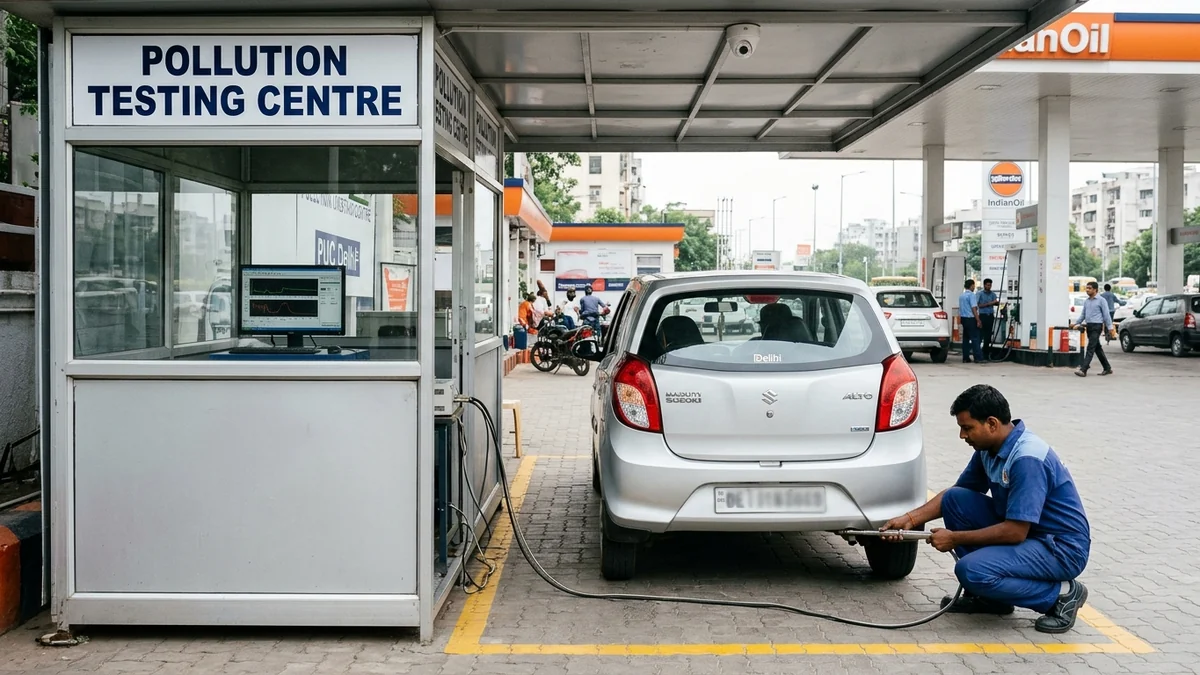
The Delhi Cabinet, chaired by Chief Minister Rekha Gupta, has approved a Rs 5 crore modernization scheme offering a one-time grant of Rs 1 lakh per eligible location to upgrade authorised Pollution Under Control (PUC) centres across the national capital. Covering around 500 petrol stations and workshops that house approximately 827 licensed petrol, CNG, and diesel testing booths, the overhaul targets proxy testing and aims to integrate live bay video feeds with Delhi Transport Department enforcement servers.
Vehicle emission testing in Delhi NCR sits at the center of winter pollution enforcement and fuel-pump Automated Number Plate Recognition (ANPR) drives. Despite mandatory tailpipe checks under Rule 115 of the Central Motor Vehicles Rules (CMVR), 1989, spot inspections by Transport Department squads repeatedly flagged centres issuing Pollution Under Control Certificates (PUCC) from photographs or uncalibrated exhaust probes without physically testing vehicles inside the bay.
What the Rs 1 Lakh Per-Location PUC Upgrade Covers
Under the approved Delhi Transport Department guidelines, the Rs 1 lakh financial assistance per location funds four mandatory civil and digital upgrades before continued licence renewal:
- Live CCTV Surveillance & Direct Monitoring: High-definition cameras positioned to capture the vehicle's rear registration plate and physical probe insertion into the exhaust pipe in one continuous frame, integrated with Transport Department inspection oversight to prevent fake or remote certificate generation.
- Standardized Testing Bays & Waiting Areas: Proper bay markings, clear customer drive-in entry/exit lanes at fuel pumps, sheltered seating, and dedicated testing cabins so emission checks do not block petrol and CNG refuelling queues.
- Uniform Rate & Compliance Signage: Weatherproof signboards displaying notified testing tariffs, validity schedules, and official helpline numbers in a uniform format across all roughly 500 sites.
- Calibrated Gas Analyzers & Smoke Meters: Periodic calibration compliance for 4-gas analyzers (petrol/CNG/LPG) and opacity smoke meters (diesel vehicles) wired directly into the central Parivahan VAHAN PUCC portal.
| Vehicle & Fuel Category | Current Delhi Notified Fee (+ 18% GST) | Former Fee (Pre-Revision) | Validity Window & Non-Compliance Penalty |
|---|---|---|---|
| Two-Wheelers & Three-Wheelers (Petrol / CNG / LPG) | Rs 80 (+ GST) | Rs 60 | 1 year free for new vehicles; 12 months for BS-IV/BS-VI in Delhi (3 months for older pre-BS-IV vehicles) |
| Four-Wheelers & Above (Petrol / CNG / LPG) | Rs 110 (+ GST) | Rs 80 | 12 months for BS-IV and BS-VI compliant models; 3 months for pre-BS-IV models |
| Diesel Vehicles (All Private & Commercial) | Rs 140 (+ GST) | Rs 100 | Smoke opacity meter test mandatory; expired PUCC attracts Rs 10,000 fine under Section 190(2) |
Why Fake PUC Certificates Trigger Instant E-Challans and RC Blocks
Under Delhi's No PUCC, No Fuel enforcement framework, ANPR cameras installed at petrol pumps and major arterial junctions scan passing license plates in real time against the central VAHAN database. When a vehicle lacks a valid PUCC entry linked to an authorised booth ID, enforcement systems flag the owner for an immediate Section 190(2) Motor Vehicles Act challan carrying a Rs 10,000 fine and potential 3-month driving licence disqualification.
Checklist Before Visiting a Delhi PUC Testing Centre
- Warm Up the Engine Briefly: Drive for 10–15 minutes before reaching the fuel pump booth so the catalytic converter and engine oil reach normal operating temperature, reducing false CO and hydrocarbon spikes.
- Ensure Your Mobile Number Is Linked on VAHAN: PUCC certificates require an OTP verification delivered to the mobile number tied to your vehicle RC. Update stale phone numbers via your zonal Delhi RTO District Office before testing.
- Verify Both Validity and Fuel Type on the Printout: Check that the printed slip and Parivahan portal entry display the correct fuel category (Petrol/CNG dual-fuel vehicles must show active test values) and full 12-month validity where applicable.
- Resolve Pending ANPR Pollution Challans Early: If an expired PUCC already triggered an automated camera notice, track compounding options on our Delhi E-Challan & Traffic Fine Portal Guide or brush up on compliance rules with the Bilingual RTO Practice Simulator.