
MoRTH Preparing Bharat NCAP-Style Safety Standards for E-Rickshaws Across India
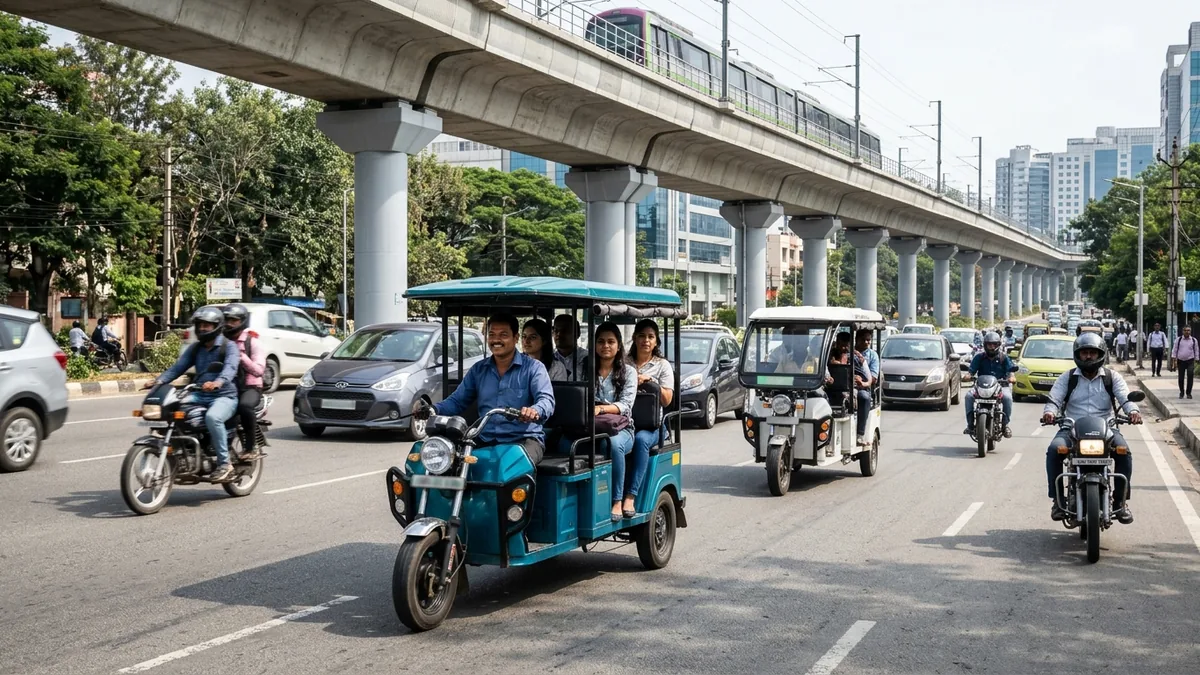
Union Minister for Road Transport and Highways Nitin Gadkari announced that the Ministry of Road Transport and Highways (MoRTH) is preparing formal safety standards for electric three-wheeler e-rickshaws patterned on the Bharat New Car Assessment Program (Bharat NCAP). Speaking at the Bharatiya Yuva Shakti Trust (BYST) JRD Tata Awards 2026 in New Delhi on November 17, 2026, Gadkari stated: "We are preparing safety standards for e-rickshaws on the lines of Bharat NCAP to enhance road safety measures."
Citing national crash data showing nearly 5 lakh road accidents and approximately 1.8 lakh fatalities annually across India, the Minister noted that rapid growth in urban and semi-urban last-mile mobility has outpaced structured crashworthiness benchmarks for light electric three-wheelers. At this stage, MoRTH has outlined the policy direction only; no draft Gazette (G.S.R.) notification, testing protocol, star-rating matrix, or mandatory enforcement date has been published.
How Proposed E-Rickshaw Standards Compare With Existing Rules
While passenger cars already undergo voluntary star-rated crash evaluations under Bharat NCAP (launched in 2023 under AIS-197), e-rickshaws are currently governed primarily by basic Motor Vehicles Act definitions and battery safety standards:
| Regulatory Dimension | Current E-Rickshaw Framework (MV Act & CMVR) | Existing Bharat NCAP (Passenger Cars) / Proposed E-Rickshaw Focus |
|---|---|---|
| Statutory Definition & Power Cap | Section 2A of MV Act & CMVR Rule 2(u): max 25 km/h design speed, max 2,000 W net motor power, up to 4 passengers plus driver | Bharat NCAP currently applies to M1 category passenger vehicles (up to 3.5 tonnes) with 1-to-5 star Adult and Child Occupant Protection scores |
| Structural & Occupant Protection | Basic type-approval requirements without passenger-car-style crash star ratings | MoRTH's planned e-rickshaw framework targets structural strength, braking stability, rollover resistance, and occupant safety |
| Battery & Electrical Safety | Mandated compliance with AIS-156 traction battery safety standards (thermal propagation and BMS safeguards) | Remains mandatory alongside broader MoRTH EV safety and homologation initiatives |
| Current Legal Status | Active nationwide across RTO registrations and commercial fitness cycles | Policy announcement only; awaiting draft CMVR / AIS standard publication and stakeholder consultation |
Current RTO Compliance Requirements for E-Rickshaw Owners
Until MoRTH notifies formal testing protocols or compliance dates for the upcoming standards, e-rickshaw owners, fleet operators, and dealerships remain bound by existing Central Motor Vehicles Rules across state RTOs:
- VAHAN Registration & HSRP: Every commercial e-rickshaw sold and operated on public roads must carry valid RTO registration on VAHAN (Vehicle RC Guide) and fitted High Security Registration Plates (HSRP).
- Driver Licensing: Operators must hold a valid e-rickshaw / commercial Driving Licence issued under the Sarathi Parivahan system.
- Insurance, Fitness & Type Approval: Vehicles must use ARAI/ICAT type-approved chassis and AIS-156 certified batteries, maintain active third-party motor insurance, and complete scheduled commercial fitness renewals via RTO compliance forms.